
How to Write a Short Story in 1,000 Words: A Step-by-Step Guide for Beginners
A thousand words is roughly four pages of a paperback. It is also, reliably, the length of one decision. Not a life, not a saga, not the whole summer of 1987 — one decision, made by one person, with consequences they have to live with by the final line.
That constraint is a gift. Beginners often drown in the freedom of an open page; 1,000 words gives you a container. Here is how to plan, draft and edit a complete short story inside it.
Find the spine before you write a sentence
Stories are not collections of events. They are changes. Someone begins in one state of mind and ends in another, and the reader needs to feel the movement.
Write your spine as a single sentence: A [character] wants [something], but [obstacle], so they [action]. Keep it concrete. Not "a man reflects on grief" — that is a mood, not a story. Instead: "A retired bus driver wants to return a dead man's coat to his daughter, but she will not answer the door, so he leaves it on the gate with the note he never sent."
That is forty words. You now have 960 left, and you know exactly what has to happen. If you cannot write the sentence, you do not yet have a story — you have a setting. Change something until you do.
Plan on one page, not twenty
You do not need a chapter-by-chapter outline. You need three beats and a rough sense of proportion.
- Opening (roughly 150 words): Place us in a moment already in motion. A character, a place, a problem visible on the first page.
- Middle (roughly 500 words): The character pushes against the obstacle. They try something, it fails or costs them, they try again. This is where most of the story lives.
- Ending (roughly 300 words): The choice, and its aftermath. Not a summary — a final image or line that lands the change.
Write each beat as one bullet point on an index card or the back of an envelope. If a beat does not move the character closer to or further from what they want, it does not belong.
Cast two people, not six
At this length, every extra name is a cost. Two characters is comfortable; three is generous. Background figures can stay as "the woman behind the counter" and never need a past.
Give your main character one physical habit, one thing they want, and one thing they would rather not admit. That is enough. Reveal all of it through action rather than explanation.
Instead of: He was a proud man who had never forgiven his brother. Try: He folded the letter twice and put it in the drawer with the others. The second version tells us about pride and forgiveness, and it takes ten words instead of twelve.
Draft it in one sitting
Drafting is not editing with better posture. Turn the internal critic off and keep moving.
- Start with the first line you can hear. It does not have to be the actual first line.
- Write in scenes, not summary. If two people are talking, put us in the room with them.
- Enter late and leave early. Skip the doorbell and the goodbye at the kerb.
- If you get stuck, write "[fix this]" and jump straight to the next beat.
You will overshoot. Most first drafts land somewhere between 1,200 and 1,600 words. That is normal, and it is a good problem — cutting is easier than inventing.
Edit like a stranger
Leave the draft alone for a day if you can. Read it once without a pen, just to see whether the spine holds. Only after that should you start cutting.
The usual suspects, in rough order of how many words they save:
- Throat-clearing. Weather reports, waking-up scenes, descriptions of a character's morning routine. Start where the trouble begins.
- Explaining what you have already shown. If she slams the door, you do not need "she was furious".
- Adverbs and clever dialogue tags. "He said quietly" rarely beats "he said" followed by a line that sounds quiet.
- Adjectives in pairs. Keep the sharper one. "A cold, grey morning" becomes "a grey morning" — or better, "the kind of morning that makes your knees ache".
- The second ending. Many drafts have two. Keep the earlier one; it is usually the braver of the pair.
Read the revised version aloud. Your ear catches repetition, clunky rhythm and lines that only work on the page. Then put the first and last sentences side by side. If they do not speak to each other, you have one more small revision to make.
Now write the thing
Set a timer for forty minutes. Write the spine sentence, jot down three beats, and draft the story from start to finish without stopping. Put it away overnight, then cut it hard the next morning.
Your first 1,000-word story will probably not be good. Your fifth will be noticeably better, and your tenth will teach you something the first nine could not. Send one to a friend who reads, or to a small magazine that publishes short fiction. Writers improve by finishing things, and 1,000 words is a finish line you can reach in an afternoon.
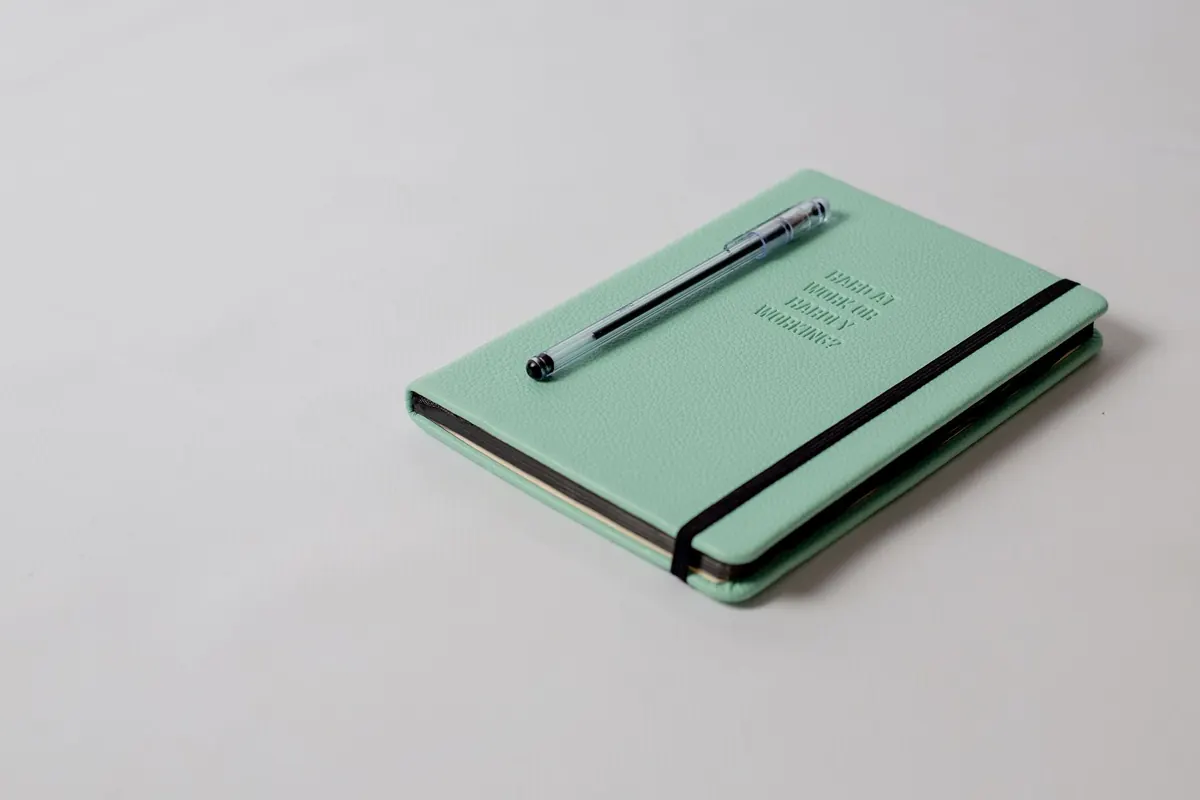
Photo: Nathi Ngwenya / Pexels