
Common Mistakes New Poets Make with Metre and How to Fix Them
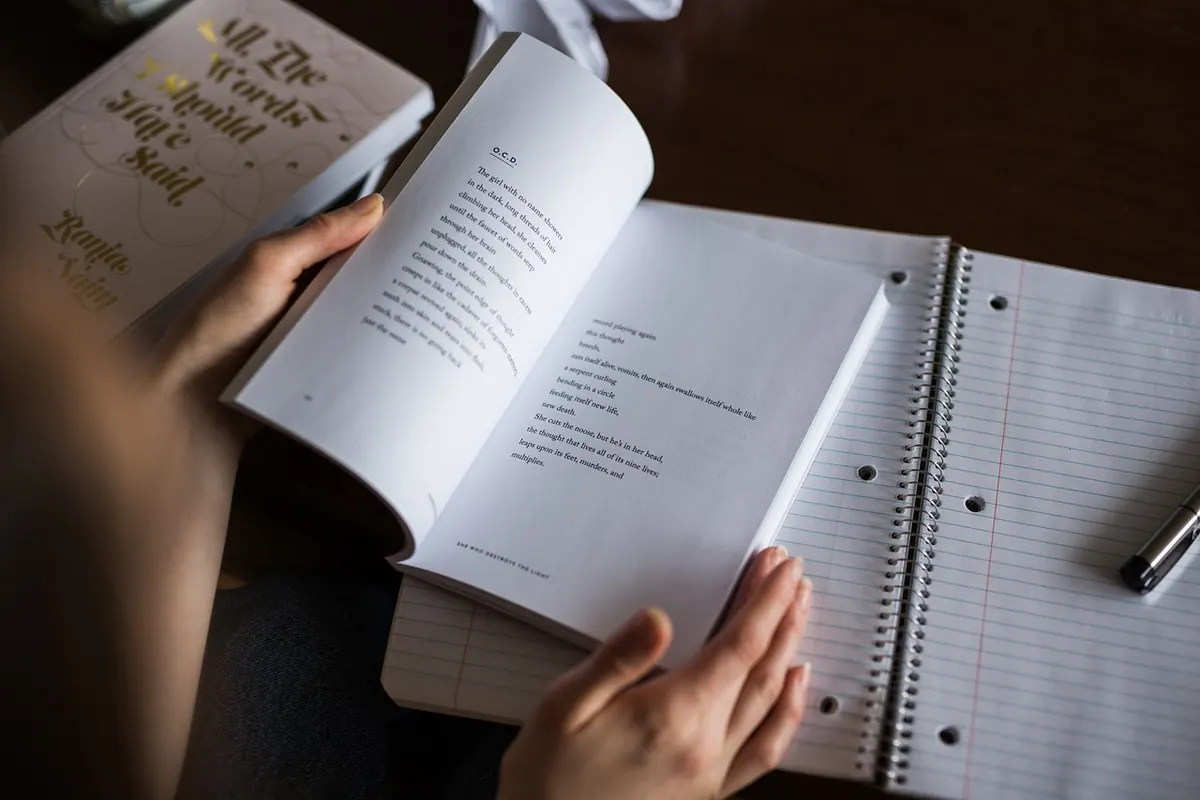
Most poems that falter when read aloud falter in the same few places. The images are fine, the language is fresh, and yet something trips. Almost always it is the pulse underneath the words. Metre is not a rulebook to obey; it is the pattern of stresses a reader hears, and the moment that pattern wobbles without purpose, attention slips away from your meaning and lands on your mechanics.
The encouraging part is that nearly every rhythmic problem has a fix you can try this afternoon. Here are the ones that come up again and again.
Counting Syllables Instead of Hearing Stress
Ten syllables does not make a line iambic pentameter. It makes a line ten syllables long. Metre is a pattern of stresses, and the ear counts beats, not letters.
Take this line: The telephone was ringing in the hall. Ten syllables, so a syllable-counter would call it pentameter. Read it aloud and you get three clear stresses — TELephone, RINGing, HALL. The line is really trimeter with a lot of unstuffed baggage around it.
Compare: The wind was blowing through the empty street. Also ten syllables, but now you hear five beats: WIND, BLOWing, THROUGH, EMPty, STREET. That is a pentameter line. The fix is simple in principle and slow in practice: stop counting syllables and start marking stresses. Read the line aloud, put a dot over every syllable you actually lean on, and trust your voice over your arithmetic.
Padding the Line to Make It Fit
When a line comes up short, the temptation is to stuff it. Out come doth, o'er, e'er, 'twas, and that reliable filler, did. The metre may fill out, but the poem starts wearing someone else's clothes.
When first I saw her, then my heart did sing has the beat, and none of the life. The first time that I saw her, my heart sang is plainer, quicker, and truer. The same applies to adjectives bolted on for weight: the vast and lonely ocean is one word doing the work of three.
The useful habit here is substitution rather than addition. If a foot needs a stress, swap a word for another word of the same meaning with a different stress pattern. Beautiful becomes lovely; remember becomes recall. You keep the sense and gain the beat, and nothing looks borrowed.
Inversions That Sound Like Costume Drama
Word order bent backwards for the sake of metre is one of the most recognisable marks of an early draft. Beside the river dark I stood and wept is grammatically legal and rhythmically tidy, and it sounds like a parody of nineteenth-century verse. Nobody says the river dark.
Try Beside the dark river I stood and wept, or better, let the sentence find its own shape: I stood beside the river in the dark and wept. The metre now has to accommodate the language rather than the other way round, which is exactly where interesting rhythm comes from.
Inversion is a tool, not a crime. Used once, deliberately, at a moment of pressure, it can lift a line. Used four times a stanza, it makes your poem sound like an antique.
Free Verse Still Has a Pulse
Free verse is not metre switched off. It is metre you invent as you go, line by line, and it depends even more heavily on your ear because nothing external is holding it up.
Most of that pulse lives in the line break. A break is a small, deliberate silence, and it should land somewhere that matters. Read this as prose: The tide came in. I watched it cover the rocks where we had left our shoes, and I did not move. Now break it after rocks, and the pause falls on the place that hurt. Break it after the — a break chosen purely because the line looked long enough — and the reader pauses on a word that carries nothing, which reads as clumsiness rather than craft.
The same tension shows up with punctuation. If every line ends in a comma or a full stop, the poem plods, one heavy foot after another. If no line ever ends where the sentence ends, the reader loses their footing. Let syntax and line endings disagree sometimes. That friction is where free verse gets its energy.
Metrical Monotony and How to Break It
A poem written in perfectly regular iambic pentameter from first line to last is not a triumph of craft; it is a metronome. Readers stop hearing the beat precisely because it never varies.
Two remedies do most of the work. The first is substitution: allow a trochee to land where an iamb belongs, opening a line with a falling foot — SIlence, then the rest of the sentence. The second is the caesura, a mid-line pause, usually marked by punctuation: The door was open, so I went inside. That small break after open resets the reader's ear.
Vary line length too. One short line after four long ones can feel like a held breath. Deliberate irregularity reads as control; accidental irregularity reads as an accident. The difference is whether you chose it.
A Revision Routine for Rhythm
Rather than fixing metre line by line as you draft, finish the poem first, then work through it in one pass:
- Mark the stresses by hand. Read aloud and put a mark over every syllable you naturally stress. Do not correct yourself as you go — record what you actually say, not what you meant.
- Flatten the poem into prose. Remove the line breaks and read the sentences straight through. Where do the natural pauses fall? Anywhere they disagree with your line endings, decide which one you meant.
- Tap the beat. Tap the table on each stress. If your hand hesitates, the reader will hesitate too.
- Swap, don't pad. For every filler word, find a concrete replacement of the same meaning and a different stress pattern.
- Break one thing on purpose. Shorten a line, add a caesura, or let a substitution land at the moment of highest feeling. Then check that the break reads as intent.
- Record yourself and listen back a day later. You will hear stumbles you read straight past while drafting.
Read It Aloud, Then Read It Again
Every fix in this piece comes down to one habit: hearing your poem rather than looking at it. Print it. Read it standing up, at speaking pace, without rehearsal. Where your voice snags, the poem snags. Where you speed up, the poem is probably working.
Then put it away for a night and read it again in the morning. Metre is not decoration added at the end. It is the shape the reader's breath takes as they move through your lines, and you are the first reader who gets to test it.
Photo: StockSnap / Pixabay