
Writing About Place: How to Capture a British Town or Landscape in Essays
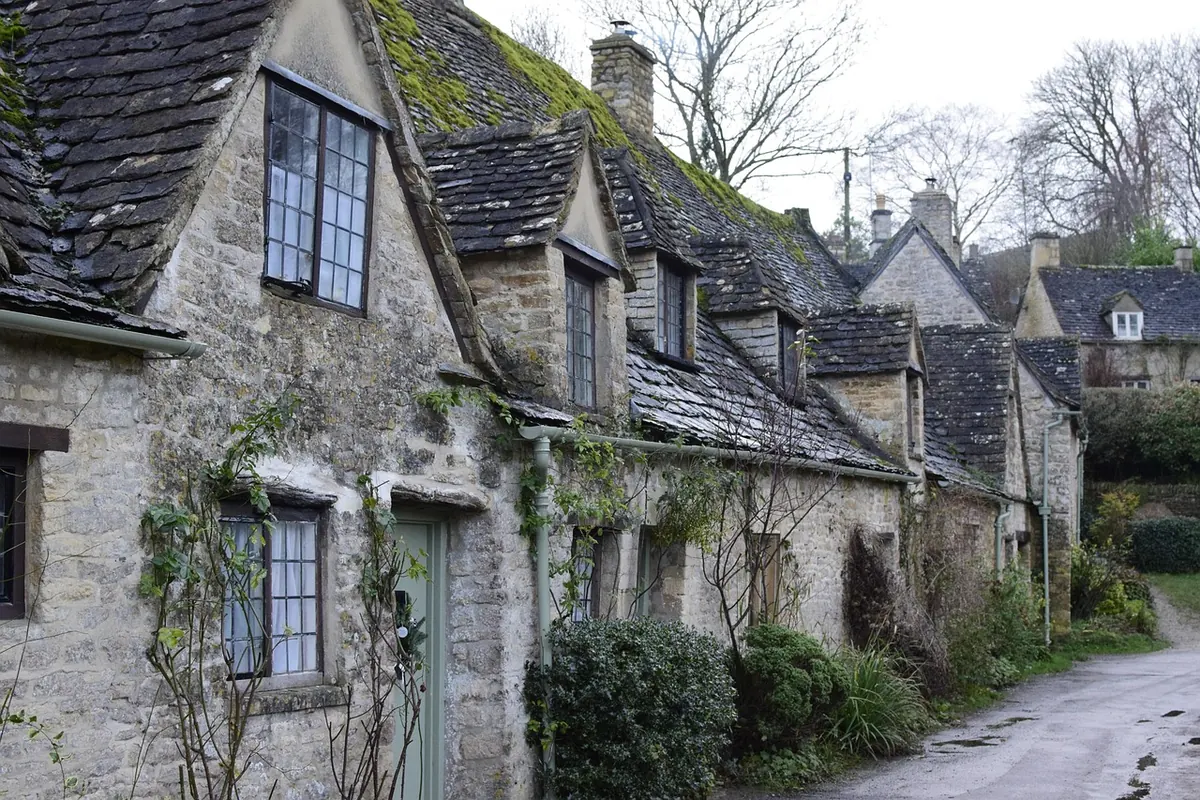
Every town has a sentence only it could produce. The 18:12 stopping at the end of a terrace while somebody finishes a cigarette. The footpath that runs out past the sewage works and then, suddenly, gives you three counties at once. The chip shop that shuts on Tuesdays and has done since before you were born. A good place essay is not a description of everything. It is a hunt for the words that could not be transplanted anywhere else.
Begin with a square mile, not a county
Writing about "Cumbria" or "the Black Country" invites generalities, and generalities are where place writing goes to die. Set yourself a boundary instead. A parish. A postcode. The twenty-minute walk from your front door. Boundaries create form, and form is what stops an essay becoming a list of things you happen to like.
So don't write about the Peak District; write about the mile between the A57 and the reservoir, including the lay-by where the burger van parks. Don't write about Bristol; write about the stretch of harbour where the houseboats are moored and the cormorants sit on the same three posts all winter. The narrower the patch, the more you notice, because there is nowhere to hide behind a postcard view.
Do the homework, then put most of it away
Research gives you depth of field — the ability to see a street as more than what it looks like today. You do not need to be an academic. You need a library card, a couple of hours, and a willingness to be surprised.
- Maps, old and new. The current 1:25,000 sheet tells you what to walk; Victorian six-inch sheets, many free to view online, show what was demolished, filled in, or left as a stubborn curve in a modern road.
- Local studies libraries and county record offices. Trade directories, tithe maps, enclosure awards, census returns. The 1841 to 1921 censuses list occupations street by street, which is quietly thrilling.
- Listed building records. The national heritage lists for England, Scotland and Wales describe ordinary chapels, mills, pubs and walls in plain language: dates, materials, what replaced what.
- Newspaper archives, often on microfilm, sometimes digitised. Coroner's reports and letters pages are where a town argues with itself.
- Parish council minutes. Not glamorous, consistently revealing. Planning objections are a diary of what people fear.
- Oral history recordings and photograph collections held by museums and libraries. Listen for the words people use, not just the facts they give.
Then ration it. One precise fact that changes how a reader sees a building beats four paragraphs of potted history. If your research starts to sound like a plaque, you have kept too much of it.
Sit still and take notes
Walk the place twice, at different hours, in different weather. Then stop moving. Twenty minutes on a bench will teach you more than an hour of striding about. Note the dull things: the times buses actually arrive, how many people use the gate, the way sound behaves near the bypass.
Go beyond the obvious senses. Note temperature, wind direction, the quality of light at four o'clock, the point where the ground changes underfoot from tarmac to gravel. Note verbs — what people are doing, not what they look like. Note what is missing: the phone box that is now a book swap, the pub that is now four flats.
One caution. If you overhear something worth using, change the identifying details, or leave it out. A neighbour should be able to read your essay without feeling watched.
Use memory as texture, not as evidence
Memory is unreliable about dates and remarkably precise about surfaces: the cold of a school rail, the smell of a cloakroom, the particular clatter of a gate. Use it for that. Where you are unsure, attribute. "My grandfather said the flood came up to the third step" is honest, and more interesting than a confident invented fact.
Resist the golden haze. Writing that everyone played out until dark flattens a place into a nostalgic postcard. Include what is ugly, new or awkward — the fly-tipped mattress on the lane, the empty unit with the letting board up, the plastic grass in a front garden. An essay that can hold the awkward details is one a reader will trust.
Give the piece a spine
An essay about a place needs a reason to keep moving. The walk is the most reliable spine: it is chronological, spatial, and it supplies an ending for free. Other spines work just as well — a single object followed through time, a question you never quite answer, one day, a return visit after fifteen years.
Braid the three materials
Observation, research and memory should interleave rather than sit in separate blocks. A paragraph of history followed by a paragraph of scenery reads like a school project. Cut between them. Let a memory interrupt the description of a car park; let a map reference complicate what you thought you remembered.
Sentences that could only be about here
Specific nouns, verbs doing real work, adjectives kept on a short lead. Test every sentence: could it be about somewhere else? If yes, revise it or lose it.
A cold wind blew across the empty market square is weather anywhere. Wind came up the slope off the estuary and moved the plastic sheeting on the stalls that had not been put out gives you a town with a slope, a trade and an hour of the morning.
Use dialect sparingly, and only when you are certain of the spelling and the sense; a misremembered word is worse than none. And you do not have to name every bird. "The jackdaws on the pylon" is usually more useful than "the corvids on the pylon".
A sequence for your first draft
- Write your boundary at the top of the page and keep to it.
- Collect in three columns: observation, research, memory. An hour of each is plenty for a first attempt.
- Write down, in one sentence, the question the essay is trying to answer. Not the subject — the question.
- Draft eight hundred words without stopping. No research, no thesaurus, no tidying.
- Leave it a day. Read it aloud. Cut anything that could describe anywhere else. Check names, dates and spellings against your sources.
- Give it to somebody who lives there. They will spot the one detail you got wrong, and that is often the detail that makes the piece honest.
Then send it somewhere: a local magazine, a writing group, a pamphlet made with three other people who are also writing about where they live. Place writing improves the moment it has a reader who can check whether you were paying attention.
Photo: HarryJBurgess / Pixabay